Our starting point with a legacy system is to understand what can be retained and improved. Modernise where you can. Rescue what still works.
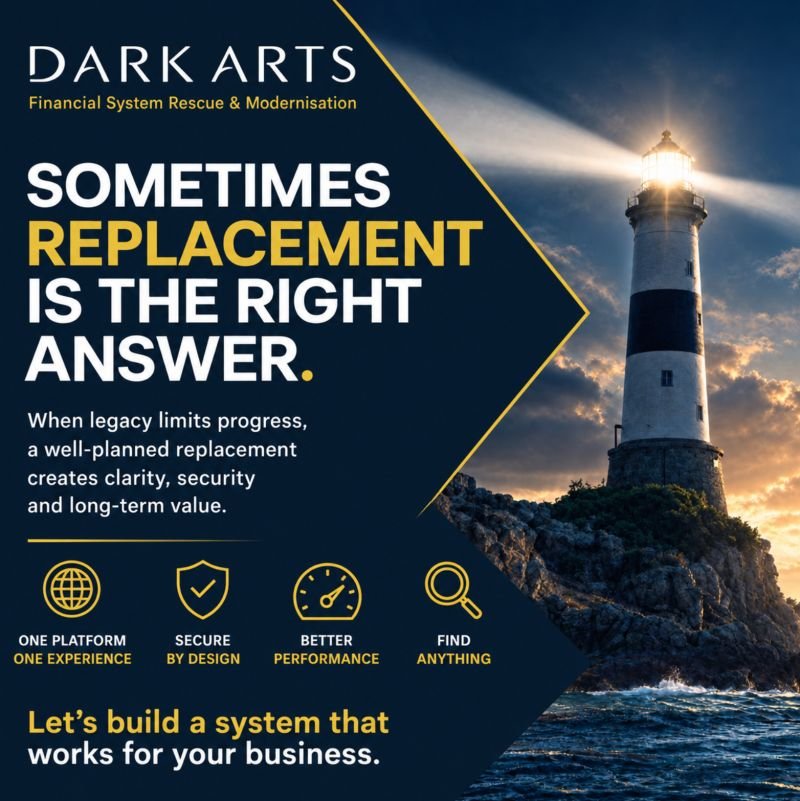
Sometimes that assessment leads to replacement.
In a recent project, we brought customer-facing and internal processes together into one application, replacing an older platform that had grown into several separate applications.
We pieced together how the business operated through the existing data, the application’s behaviour and the knowledge of the people using it.
That told us what the replacement had to preserve and where the old system was simply in the way.
We worked through the legacy data a piece at a time, mapping it into a properly structured database and tackling data cleansing alongside the migration. Keeping the migrated data in step with the old system gave us a useful early deliverable: a new reporting platform.
Throughout that work, we needed to account for the existing information and preserve the relationships and history that gave it meaning. That also included migrating the document store and maintaining the links to the correct records. A cleaner structure would be little use if something important disappeared along the way.
The old system kept running the whole time.
For the people using it, the changes are practical:
- Access from a phone or a computer.
- Faster responses in everyday use.
- Easier searching, sorting and filtering of records.
- Improved document management and viewing.
- Better reporting.
The replacement also needed to preserve the business rules and hard-won knowledge that shaped how the system worked.
A measured approach helped us deliver useful improvements early and prepare for the final transition.