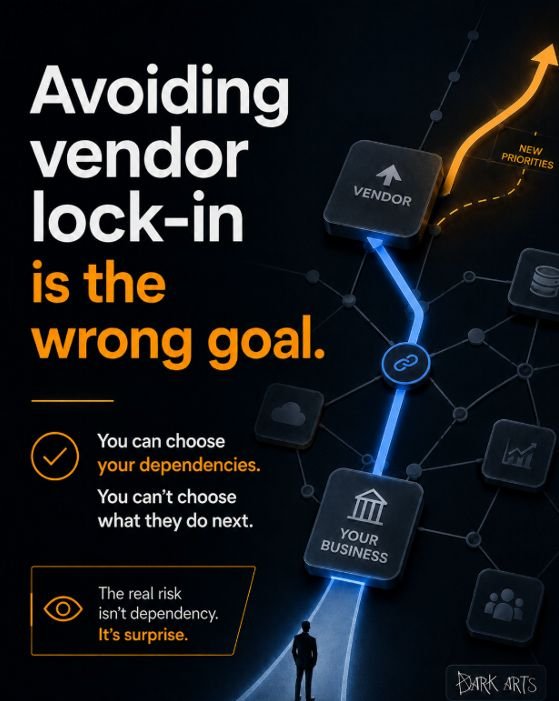
I say that as someone who regularly warns people about technical and operational risk. It still caught my team out this month.
The standard advice: avoid relying on third parties where possible. Keep it in-house. Stay in control. Sometimes that’s right. Often it isn’t sensible, or even possible.
Some tools you cannot sensibly build yourself. The expertise and years of work behind them mean rolling your own would cost far more than it could ever return. Using them is the rational call.
However, a vendor can change direction whenever it suits them, and quietly drop the thing you built your daily workflow around. You don’t get a vote. You get an email.
Then you spend weeks looking for a replacement that, if you’re lucky, comes close to what you already had.
The answer isn’t avoiding dependencies. It’s knowing which ones you’re using, and understanding the business impact:
- Know which ones would stop you cold.
- Know your fallback before you need it.
- Know the switching cost while it’s still a plan, not an emergency.
The real risk isn’t dependency. It’s surprise.