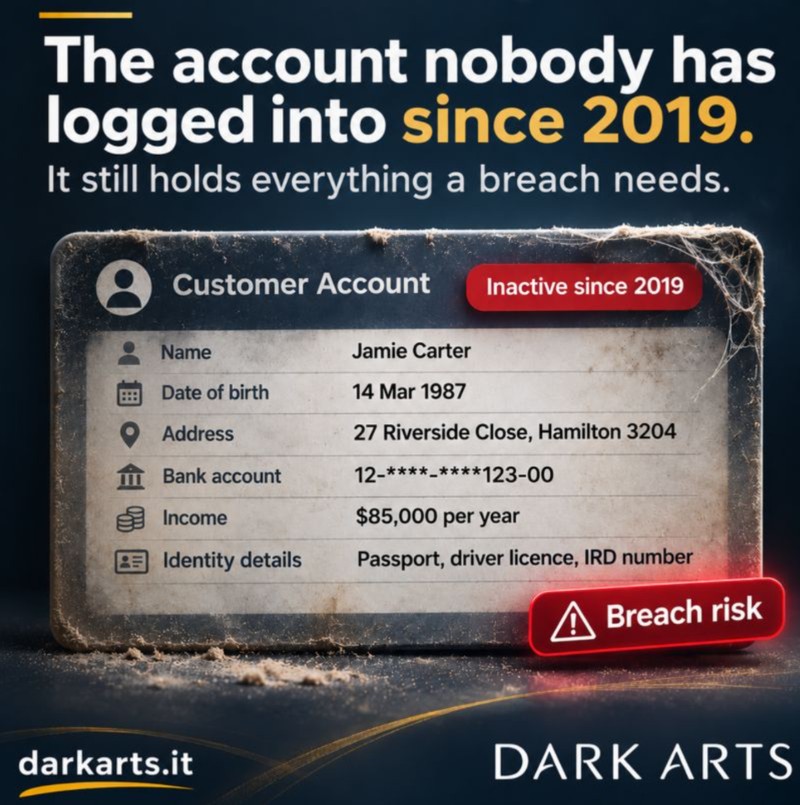
Most customer platforms I’ve worked on have them.
The applicant who never finished. The loan paid off years ago. The portal login someone created once and never used again.
Each one still holds a name, a date of birth, an address, often a bank account and an income.
Nobody owns them, because nobody uses them. They don’t appear to cost anything, so they never make the backlog.
Until there’s a breach.
New Zealand’s Privacy Commissioner released the final report into the Manage My Health breach on 30 October. It found the portal kept dormant accounts too long. The Commissioner says he generally expects agencies to check in with an account holder after 12 months of inactivity, and that expectation isn’t limited to health.
What most platforms are missing:
- a definition of dormant that the system can actually evaluate
- a scheduled job that finds those accounts, not an annual spreadsheet
- a check-in, then a close or delete path that respects legal retention requirements
- a record of every account closed or deleted, so you can show it happened
- the same process applied to accounts that were registered but never activated
None of this is particularly complicated. It just rarely gets prioritised, because the risk is invisible until it isn’t.
Data you no longer hold can’t be stolen.
It’s one of the items in the latest Event Horizon: Regulatory Radar. Message me with your sector and I’ll send you your page.
If you’re not sure how many dormant accounts are sitting in your platforms, happy to talk through how to find out.